

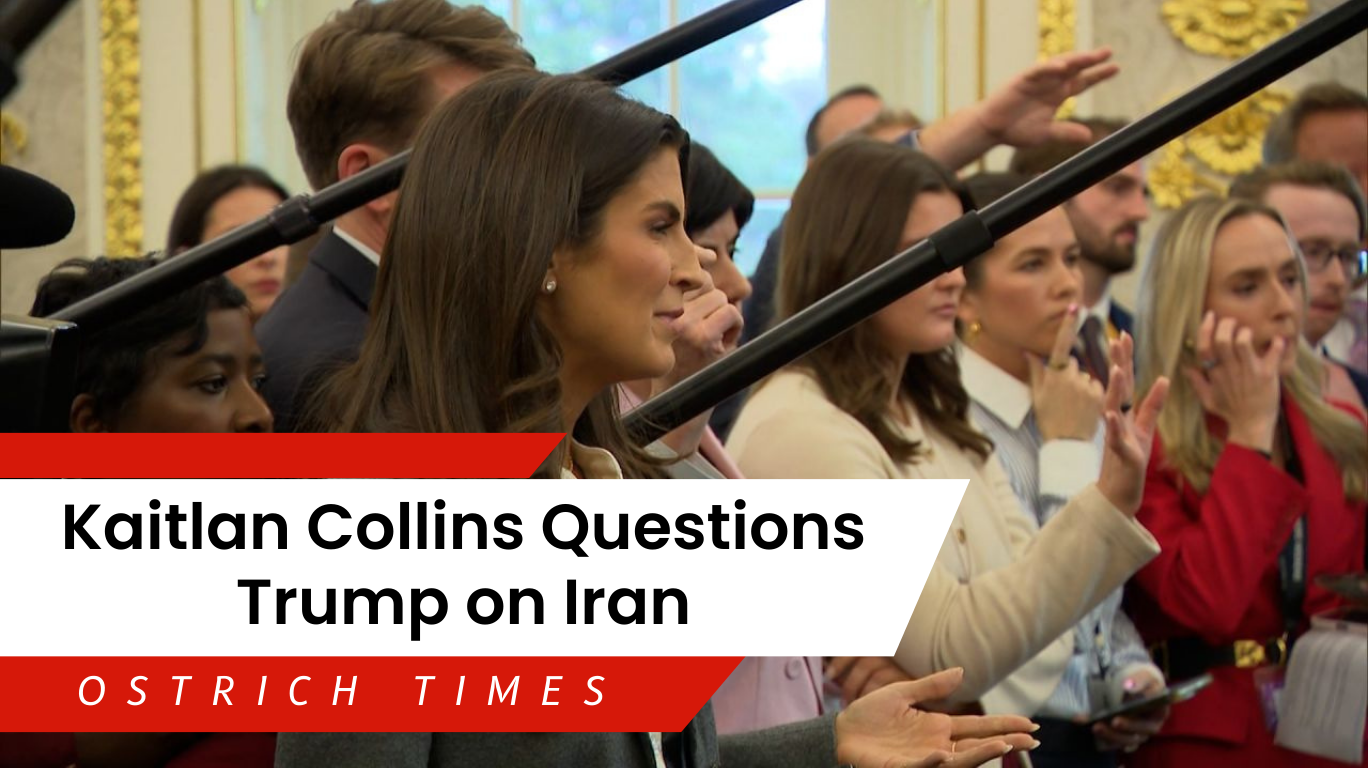
When CNN journalist Kaitlan Collins pressed former President Donald Trump on Iran, his response immediately sparked global attention. Trump claimed he had been informed by “very important sources on the other side” that killings and executions in Iran were stopping.
The exchange highlights the growing tension between political messaging, journalistic accountability, and international human rights narratives. It also underscores the role journalists like Kaitlan Collins play in shaping public understanding of complex geopolitical issues.
This article breaks down what Trump said, why Kaitlan Collins’ question matters, and how claims about Iran impact global diplomacy, media trust, and SEO-driven news coverage.
Who Is Kaitlan Collins and Why Her Question Matters
Kaitlan Collins is one of CNN’s most prominent political journalists, known for direct questioning and holding powerful figures accountable. Her interview style frequently generates headlines because she focuses on verifiable facts, clarity, and public interest.
In this case, her question about Iran was critical because:
- Iran’s human rights record is widely documented
- Claims of executions stopping require credible evidence
- Statements from a former U.S. president can influence foreign policy narratives
By asking Trump to clarify his assertion, Kaitlan Collins performed a core function of journalism: challenging unverified claims in real time.
What Did Trump Claim About Iran?
During the exchange, Trump stated that he had received information from:
“Very important sources on the other side”
According to him, these sources indicated that killings and executions in Iran were stopping.
Why This Statement Is Controversial
There are three major issues with the claim:
- Lack of source transparency
Trump did not name the sources or explain how the information was verified. - Contradiction with public data
Human rights organizations have consistently reported executions in Iran. - Diplomatic implications
Statements like these can soften or harden international pressure depending on whether they are believed.
Because of these factors, Kaitlan Collins’ follow-up questioning was essential.
Iran’s Human Rights Record: What the Data Says
To evaluate Trump’s claim, it’s important to look at independent, authoritative sources.
According to reports from:
- Amnesty International
- Human Rights Watch
- United Nations Special Rapporteurs
Iran remains one of the countries with the highest number of executions globally, particularly for political dissent, protests, and non-violent offenses.
These organizations have found no confirmed evidence of a widespread halt in executions.
This discrepancy highlights why journalistic skepticism is necessary when powerful figures make sweeping claims.
Why Kaitlan Collins’ Reporting Style Resonates With Audiences
Kaitlan Collins has built credibility by:
- Asking clear, direct questions
- Avoiding partisan framing
- Centering discussions on verifiable facts
In the Trump-Iran exchange, her approach ensured that viewers could:
- Distinguish claims from evidence
- Understand the broader geopolitical context
- Recognize unanswered questions
This is why her name often trends after major interviews—and why Kaitlan Collins has become a high-authority keyword in political news SEO.
Media, Politics, and the Power of Narrative
How Political Statements Shape Reality
When a former president claims executions are stopping in Iran, it can:
- Influence public perception
- Affect diplomatic negotiations
- Undermine or reinforce sanctions debates
That’s why media framing matters. Without journalists like Kaitlan Collins pushing back, unverified narratives can spread unchecked.
The Role of Journalists in the AI and SEO Era
In today’s digital landscape:
- Headlines are optimized for search
- Quotes spread rapidly on social media
- AI tools amplify trending narratives
This makes responsible journalism even more critical. Collins’ question ensured the claim was contextualized, not amplified blindly.
Featured Snippet: What Did Trump Say When Kaitlan Collins Asked About Iran?
Answer:
Donald Trump told CNN’s Kaitlan Collins that he had been informed by “very important sources on the other side” that killings and executions in Iran were stopping, though he did not provide evidence or identify the sources.
Public Reaction and Expert Analysis
Political analysts and human rights experts reacted quickly:
- Some criticized Trump for making unverifiable claims
- Others questioned whether the statement was strategic messaging
- Journalists emphasized the need for independent confirmation
Social media discussion surged, with Kaitlan Collins trending as viewers praised her calm but firm questioning.
Why This Moment Matters Long-Term
This exchange will be remembered because it highlights:
- The importance of fact-based journalism
- How easily narratives can shift without evidence
- The ongoing tension between political messaging and accountability
For audiences, it reinforces why journalists like Kaitlan Collins remain vital in an era of misinformation and AI-generated content.
The CNN interview:
Kaitlan Collins questioned Donald Trump about Trump claims killings in Iran have stopped.
Final Thoughts: Kaitlan Collins, Accountability, and Truth
The moment when Kaitlan Collins questioned Donald Trump about Iran serves as a case study in modern journalism. It shows how one well-placed question can expose uncertainty, demand clarity, and protect the public from unverified claims.
As AI continues to reshape content creation and SEO, human judgment, credibility, and ethical reporting remain irreplaceable.
Kaitlan Collins’ role in this exchange wasn’t just to ask a question—it was to remind viewers that truth requires evidence, not just authority.
You Might Also Like:
Celebrity K-Drama Guide: Top Korean Stars and Their Most Popular Dramas
Karoline Leavitt Net Worth in 2025: Salary, Career, and Real Estimates

















Leave a comment